
This Week, I Turned 35 Years Old & Here Are 35 Things I’ve Learned In Life So Far:
May 21, 2026
- Invest as early as you possibly can. Every dollar you save will compound in the future and keep in mind that every purchase you make has an opportunity cost. For example, a $50 jacket in 2016 is actually a $200+ jacket in 2026 had you invested that money instead. If you don’t know where to invest, low cost index funds with high dividend distributions provide diversification (lower risk) - for example when tracking the S&P 500 which has returned on average 12-15% per year in the past 10 years. As a parent, if you have the means, one of the most important ways you can set up your kid for financial success is to help them start their own investment accounts e.g. Roth IRA or custodial brokerage and put in the max money allowed each year while benefitting from tax breaks (every country laws are different so do your own research and remember that past performance doesn’t guarantee future success).
Disclaimer: this is not specific investment advice so do your own research and make the best decision for your situation.
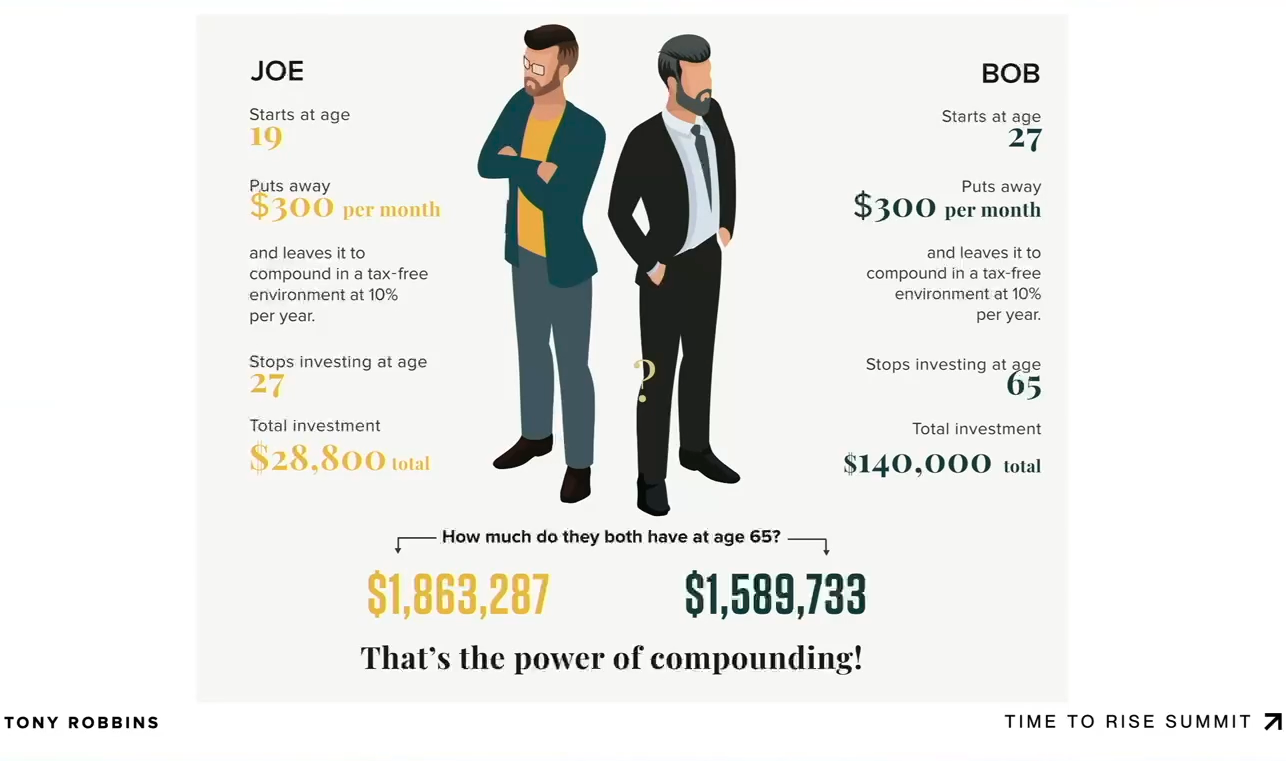
(Image Source Via Tony Robbins: Time To Rise Summit)
- Eat healthy and don’t ignore dental hygiene. Growing up in America it’s not until you leave when you realize that quite a few foods / ingredients that are approved by the FDA are actually banned in other places in the world such as in Europe and that’s for a reason. In addition, it’s easy to skip flossing, brushing your teeth or wearing your nighttime retainer, not a good idea - you will feel the impact later in life and it will cost you.
- Move your body daily. Exercise and start the day outside with sunshine if you can! It’s amazing how big of an impact it will have on your mood and motivation. Instead of doom scrolling right when you wake up every morning, hop on a stationary bicycle so at the very least you’re making progress while you consume world news. "Exercising just 15 minutes a day can slash the risk of death by 14% and boost life expectancy by 3 years on average. In addition, it can help you stay focused and more productive," according to a study in the Lancet.
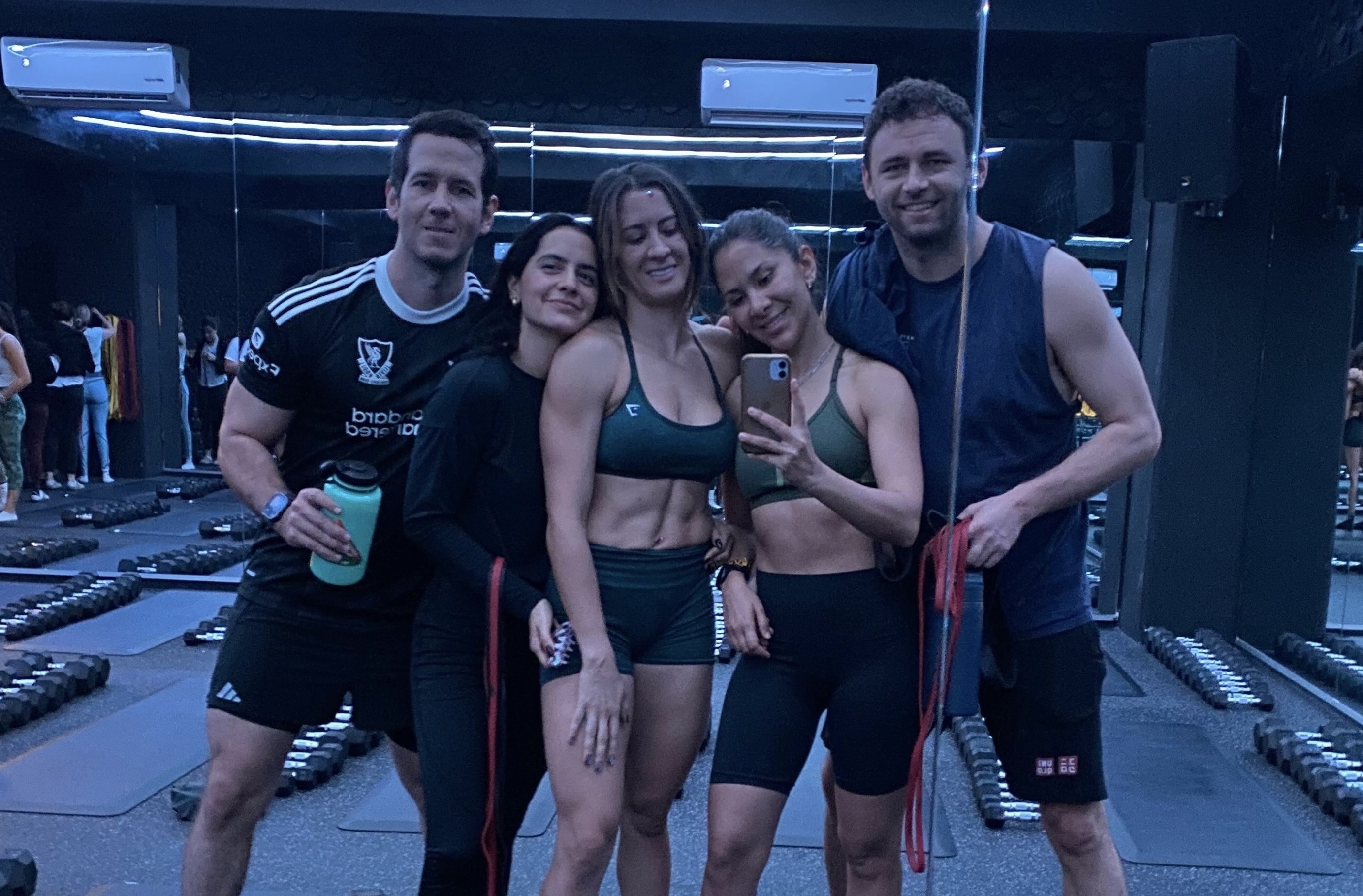
(Image Source Via Taylor Beggs: Personal Gym Coach Antonieta Sistos)
- Prioritize sleep. We sleep on average ⅓ of our lives so invest in a good mattress and ensure you’re setting yourself up for a good night's sleep. "If you’re awake from 10pm to 4am for 2 hours for 2 days per week for 25 days of the year you quality as a card carrying shift worker and likely to have a significant circadian disruption and are at increased risk for cardiovascular disease, cancer, fertility, mental health issues etc. and on average die 15 years sooner." - Kristen Holmes
- Be mindful of your addictions. Addictions are not just alcohol and drugs but the time you spend on your phone daily, on social media, listening to music etc. Go to your phone settings now → screen time → and tell me how many hours you average per day and multiply that by 365. That’s how many days a year you waste on your phone.
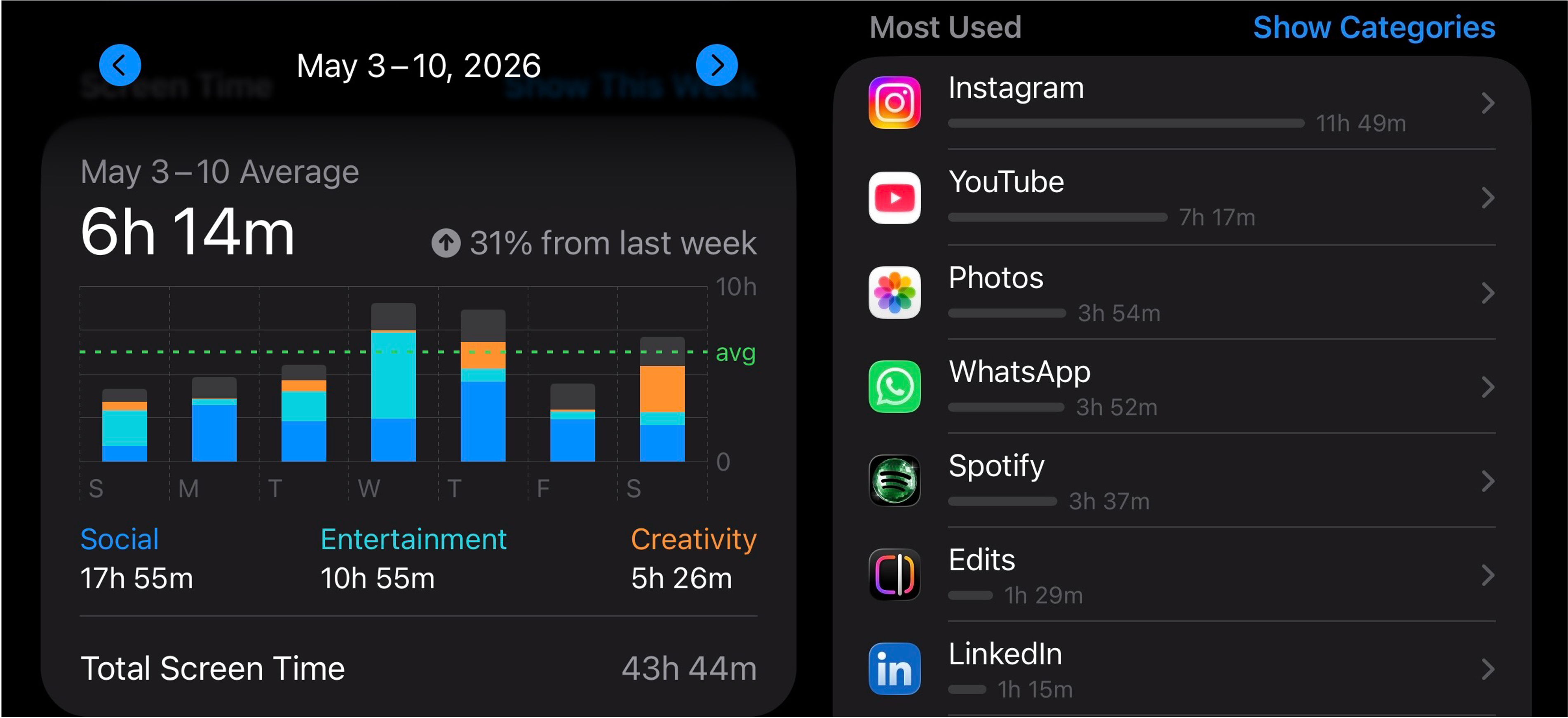 (Image Source: iPhone Usage Statistics)
 -
Leaders are readers. If I had to pick 5 books as a pre-requisite for setting yourself up for success in life and in business, here they are:
- 4 Hour Work Week - Tim Ferriss (Great book on how to optimize your time and productivity).
- Atomic Habits - James Clear (Amazing book on goal setting and how to achieve them by deconstructing via habits).
- Unshakeable - Tony Robbins (This is a more updated version and summary of Tony's "Money Master The Game." - which is another great book on the basics and foundation of investing, however, it is 700+ pages if you have the patience to read through it like I did!).
- The Holy Grail Of Investing - Tony Robbins (Latest book of the trilogy series where you can gain insights and strategies from the world's greatest investors across industries).
- Who: The A Method for Hiring - Geoff Smart (Hiring and interviewing best practices - one of the most crucial components of anyone’s career or business)
- Attend a Tony Robbins Unleash The Power Within Seminar or Time To Rise Summit. What does Serena Williams, Usher, Sara Blakely, Andre Agassi, Nelson Mandela and the Golden State Warriors have in common? They all have been coached and influenced by Tony Robbins. I invested over $1,000 to fly on my own from San Francisco to Dallas just to see Tony Robbins live for a 4 day seminar (12-14 hours per day). Since the pandemic, Tony has launched a 3 day virtual Time To Rise Summit every year in January 𝙛𝙤𝙧 𝑭𝑹𝑬𝑬 to give back and reach as many people as possible. “The best investment you can make is in yourself. The more you learn, the more you earn.” - Warren Buffett.
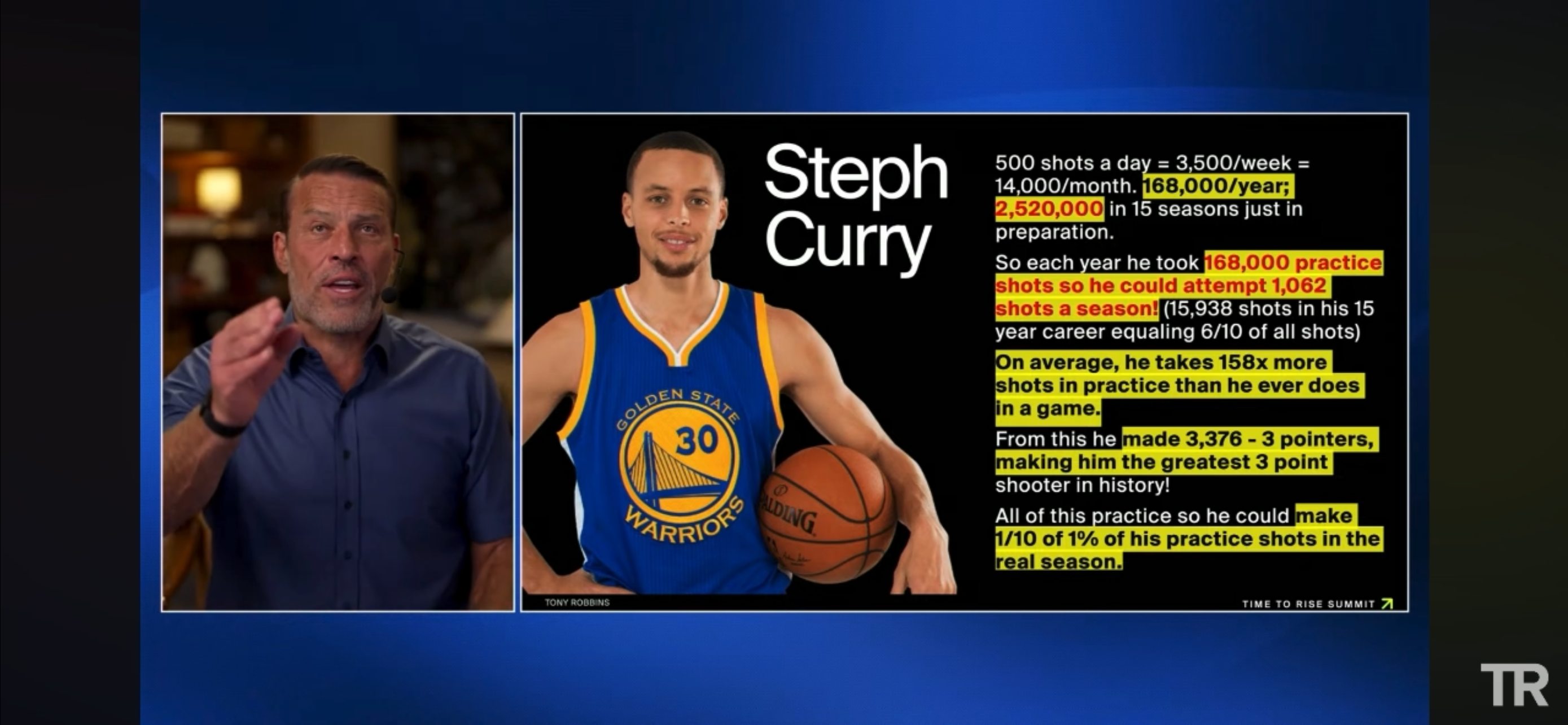 (Image Source Via Tony Robbins: Time To Rise Summit)
 - The power of self talk. The words you decide to use to describe your daily life and your story has a tremendous impact on your reality. Although published many years ago, Tony Robbins book "Awaken The Giant Within" can help you identify language that empowers you and raises your aura and level of consciousness. It looks like Tony released an updated version recently which you can download for free: "Re-Awaken The Giant Within."
- The quality of your questions dictates the quality of your life. Instead of asking vague questions like, "Do you have any feedback for me?" or "How can I improve?" ask specific questions to unearth truly constructive feedback. How can this deliverable be 10% better? What would make you “love” this instead of just “like” it? - Shivani Berry
- Find a mentor. Success leaves clues! Although nothing beats in person mentorship, luckily, with the democratization of media and information, mentors these days can come in the form of books, podcasts, online courses etc. such as Sports Entertainment Academy. If you want to accelerate your career, find a mentor who has accomplished the results you’re looking to achieve.
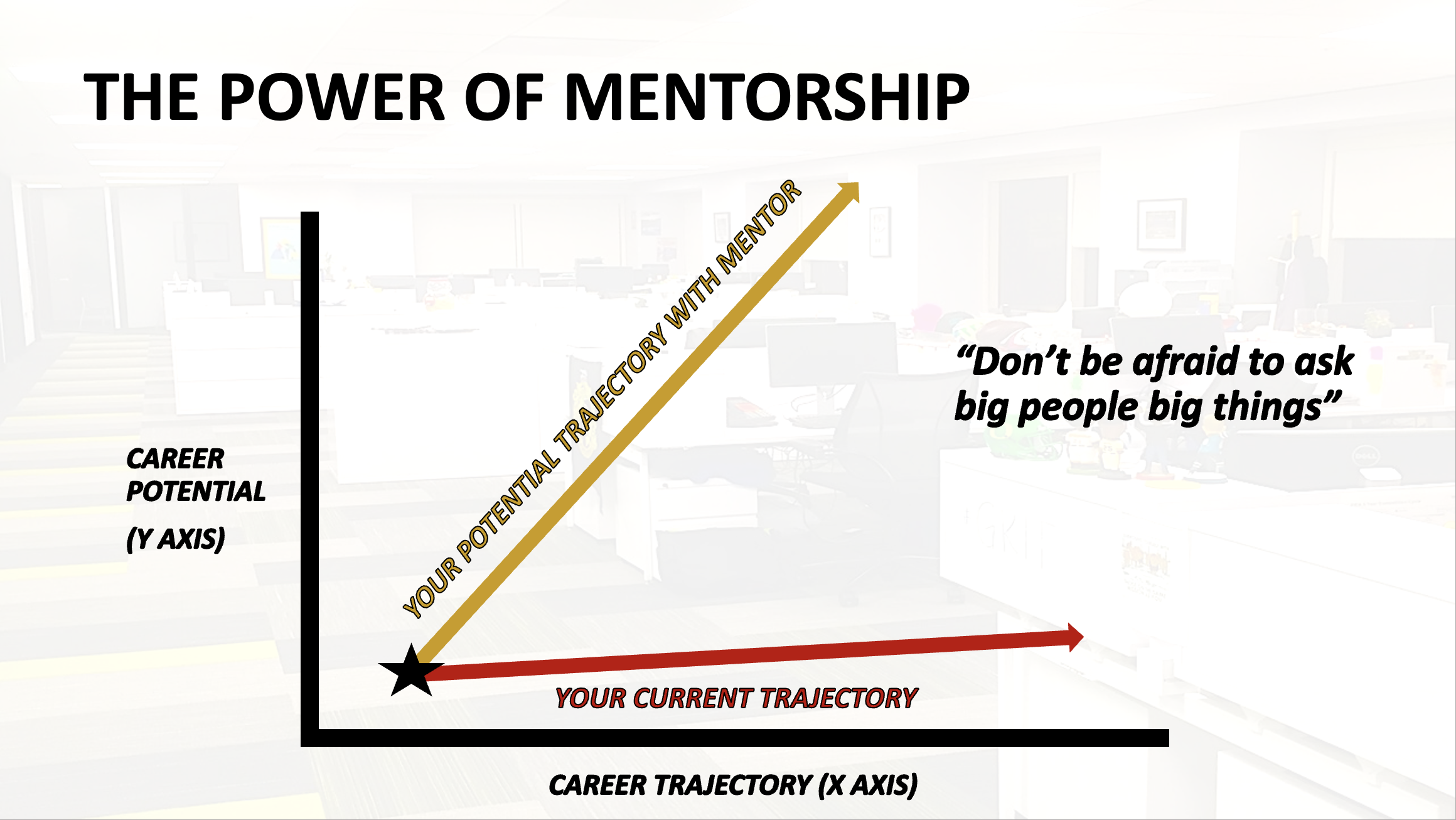 (Image Source Via Taylor Beggs: The Power Of Mentorship)
 - Learn how to set goals. More importantly, how to identify the daily habits and systems that will allow you to accomplish them. Pareto’s Law can be summarized as follows: 80% of the outputs result from 20% of the inputs.” – Tim Ferriss.
- Getting exposed to different professions when you’re younger can save a lot of time and money down the road. One of the best ways to gain that exposure is through parents, teachers, podcasts and friends' networks. If your kid is still unsure what they want to study or what degree to get, personality and career tests can be a great resource.
- The importance of formulating data-driven criteria to help your kid pick the right College or University (if that is the path they would like to go) as well as what Job / Company to apply for. For a more advanced filter, I created one in Sports Entertainment Academy which you can customize specific to applying for your dream job or school!
- Be bold and apply for jobs that scare you. You shouldn’t wait to be 100% qualified. If you can do everything on day one? You made a lateral move. Aim for jobs where you hit 70-80% of the qualifications.
 (Image Source Via Taylor Beggs: WME | IMG Dream Job Where I Was Initially Only 50% Qualified)
 - When you think you’ve landed your dream job, still be open to new opportunities. There’s been multiple times in my career when I landed my dream job and 6-12 months later an even better opportunity arose but because I was so happy and grateful in my current position I was not prepared to take that next step!
- Life is all about relationships. Who you know and who knows you. Every job I’ve gotten was through a referral from someone who vouched for me on the inside. The data shows that around 40-60% of roles are filled from referrals. There’s a saying that even if you have a great job currently, you’re interviewing for your next job NOW and I believe that is very true. The people you work with will become the next wave of decision makers at other companies in the future so make a great impression every day as every interaction counts!
- Spend quality time with family while you can. Tim Urban’s “The Tail End” does a great job in visually showing you how much time you realistically have left with your parents and loved ones.
- Choose your friends (circle) wisely. Those who you associate with will have a major influence as to what College, Universities or Jobs to apply for and the level or 'standard' at which you will set for yourself to develop the right habits and achieve your goals. “You’re the average of the top 5 people you most associate with.” - Jim Rohn. Also, playing team sports in Elementary, Middle & High School teaches your kid how to socialize, how to work with others and helps them build their network.
- Learn AI. Not everyone will lose their job to AI, however, they will lose their job to someone who knows how to use AI and someone who knows how to predict market shifts and inherent trends.
- Travel when you’re young and where it makes sense financially / career wise while keeping in mind the investing opportunity cost from lesson #1 above - that $5,000 trip in 2016 would be worth roughly $20,000+ today if it had been invested instead and dividends were reinvested. On the flip side - there’s also an opportunity cost if you wait until you’re older to travel and with more money. You may not physically be able to hike that mountain, go camping in the wilderness or be willing to stay in a shared living space with complete strangers. “I wish I spent more time working instead of traveling.” - said no one ever. Plus, getting exposed to new cultures can help you in business with communication, becoming more relatable, resourceful, solution oriented, willing to embrace uncertainty, generally more interesting as a person and can spark new ideas with a completely different perspective.
 (Image Source Via Taylor Beggs: Travel TV Interview In Zaragoza, Spain)
 - Study abroad. Some of the programs offer scholarships (I received one) and I ended up joining the International Comparative Dimensions of Business and Marketing in France, Spain and Belgium. There's also been countless times in interviews when I was asked about my experiences abroad and this is definitely a talking point that continues to stand out on my resume. Some programs are accelerated (like the one I did from May to June) which allowed me to land a summer internship (from June to August) and also participate in a volunteer mission trip to Guatemala. “The benefits of studying abroad are almost endless” - Michelle Obama
- Strive to get a great GPA. Sign up for your classes the moment they become available so you can select the best teachers with the highest chance of succeeding (and have a fair chance at getting good grades). I learned this the hard way my first semester, assuming there would be plenty of availability, only to be left with the lowest rated teachers who graded their assignments much harder.
- Employers do not only care about your GPA. They also pay attention to extra-curriculars and student organizations you joined or held a leadership position in. Introduce yourself to guest speakers who visit your college or university, ask for their business card details and add them as a follow up on LinkedIn to grow your network and establish credibility. “Your degree isn’t a guarantee” and doesn’t mean anything if you don’t apply what you’ve learned outside of a theoretical classroom setting.
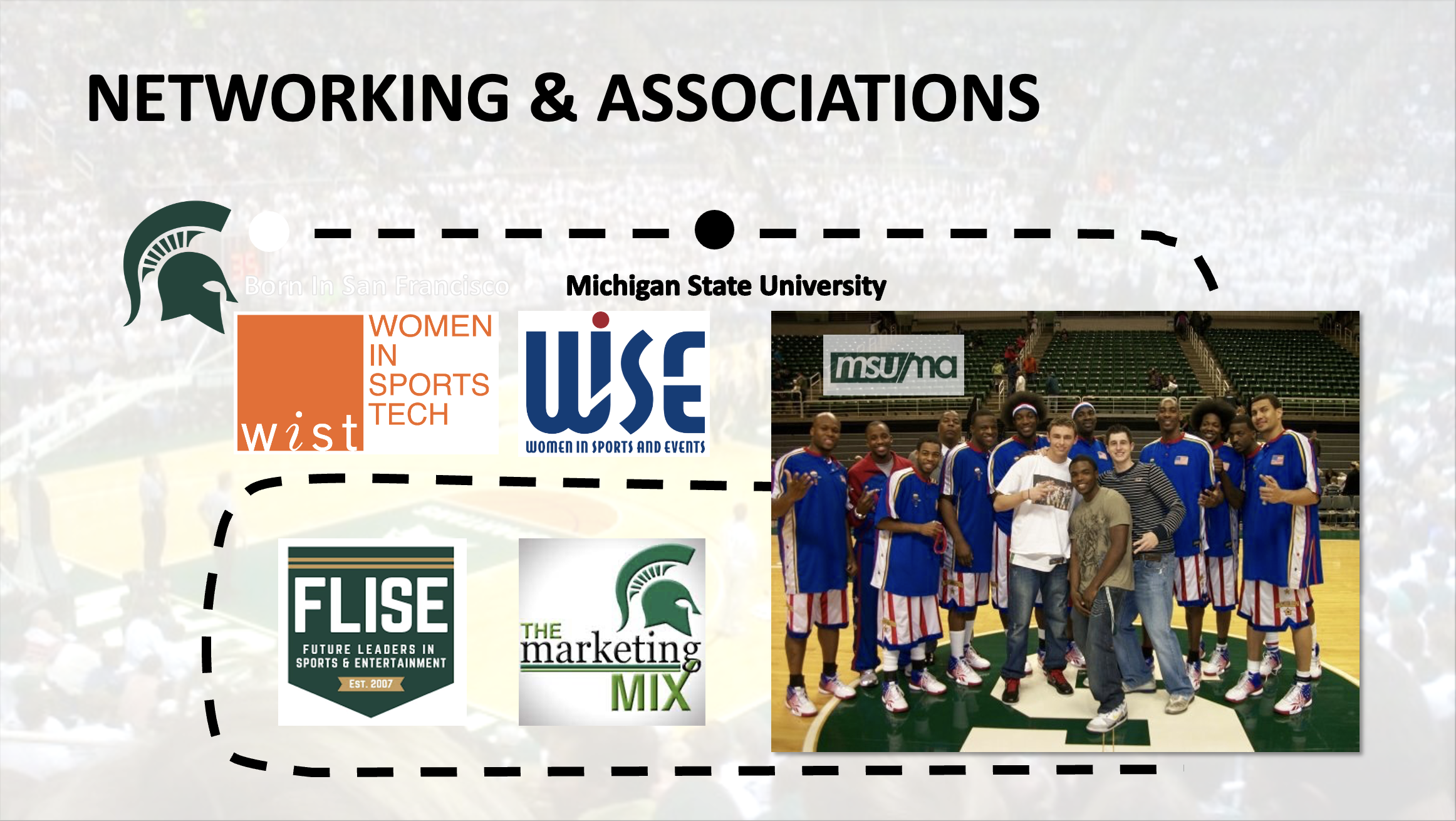 (Image Source Via Taylor Beggs: Networking & Associations)
 - Build your personal brand early. Claim your usernames across platforms for consistency and aim to have 500+ meaningful connections on LinkedIn before you graduate college / university to establish your credibility.
- Get resume, cover letter, portfolio and interviewing help early. You have one chance to make a good first impression and just like investing the earlier you succeed in your career the greater compounding returns you will yield in the future.
- Specialize earlier in your career then become a generalist. If you want to succeed early on, figure out 1-3 things to specialize in and do it better than anyone else. One of my friends learned this and decided he wanted to become one of the best email marketers in the world. He found a mentor by cold emailing someone online who had become the most successful over the past decades and now my friend is making over $300,000usd/year doing email marketing for a basketball camp network. A youth basketball camp network! Obviously if you want to become a C-Level executive later on or someone in a management position you will need to diversify and understand many different facets of the business to be able to connect the dots and successfully drive the business forward. Especially when working in larger companies, the biggest challenge is communication and getting the different departments who have their own goals working together. Also referred to as breaking down the silos.
- Learn at least 1 other language as early as possible. I took French in high school because it is the second-most geographically widespread language after English and is spoken on every continent plus my mother is French, however, if I were to redo it, I would’ve 100% taken Spanish. Spanish is the second most spoken language in the United States, providing a distinct hiring advantage and the ability to connect with local consumers in Latin America.
- Earn letters of recommendations. Excel in every facet of your internships / entry level work experience so that your bosses literally go out of their way to write you authentic and honest letters of recommendations including on LinkedIn.
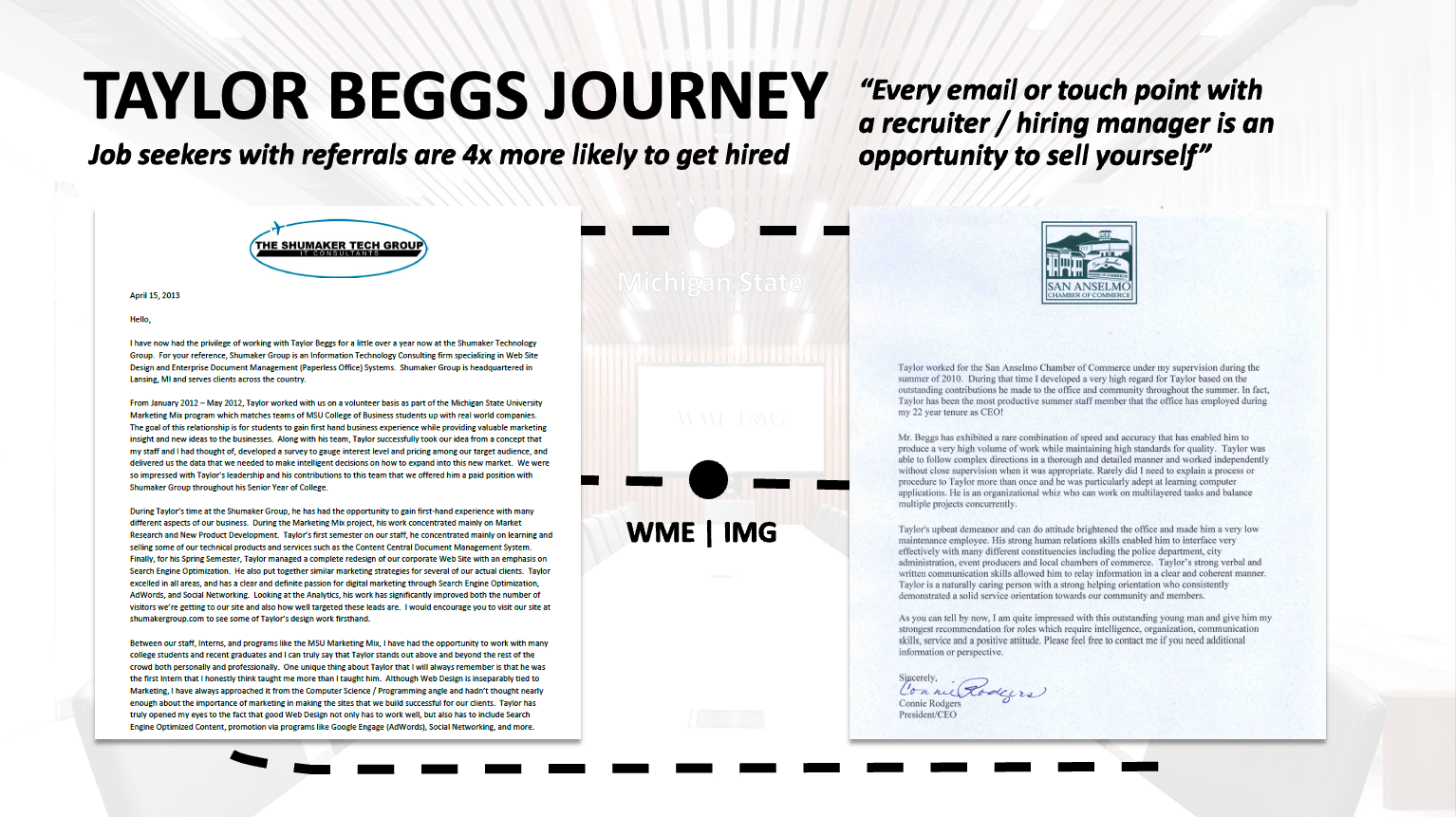 (Image Source Via Taylor Beggs: Letter Of Recommendation Examples
 - Apply for industry awards such as Front Office Sports Rising 25, Sports Business Journey 30 under 30, 40 under 40 or Sports Executive Of The Year, Forbes 30 under 30, Fortune's 40 under 40, Leaders In Sport Under 40 etc. Although receiving an award may not mean much it can certainly help establish credibility and recognition with your current employer as well as future employers as it's one way to quantify your level of success. Even if you believe you may not qualify, if you think there's even the slightest chance, I would still recommend you apply as you never know in this day and age who they may be looking for.
- A lot of things in life are negotiable. In many countries around the world, you’re actually expected to negotiate - I’ve personally saved tens of thousands of dollars including in the US by just asking if they will agree to X price. "Ask for 10% off your next few coffees. Go up to the counter and order coffee. If you don't drink coffee, order tea. If you don't drink tea, order water. I don't care. Then just ask for 10% off... The coffee challenge sounds kind of silly, but the whole point is that - in business and in life - you don't have to be on the extreme, but you have to ask for things, and you have to put yourself out there." - Noah Kagan
- Failure is actually a really bad thing. Often misconstrued as its meaning will vary depending on how you define it. For me, if you gave 100% everything you had and you did not achieve the outcome you were looking for, this is not a failure. Now to contextualize my definition of failure, I look at it differently, as a situation when an opportunity presented itself and you did not give it 100% and thus if there is any type of regret coming out of it, this is a failure as you didn't give it everything you had. This type of failure is much more painful and will often lead to rumination, or a repetitive playback in your head, dwelling on negative feelings or things you wish you would've done differently. The most 'successful' in this industry not only likely experienced one (or multiple) failures in their lifetime, but most importantly they have mastered the art of recovery and seeking tools and resources to help them find the positive in any given situation and use it to their advantage. "How you recover from failure is more important than the failure itself. You get to decide how you respond." - Michell C Clark.
- Life is not fair. You may be the most qualified or have the most experience but none of that matters because life unfortunately is not fair. Recognizing this can bring a sigh of relief and also a realization that in order to separate yourself, you need to do what others don’t. You need a competitive advantage so strong that even if you don’t know someone on the inside, they can’t resist saying 'yes'. Sports Entertainment Academy may be that unfair advantage you’re looking for. Apply now!
- Don’t be so hard on yourself. "Stop regretting past decisions. You made the best choice at the time with the knowledge you had. Be at peace with it. You’ll get to where you want in life just not in the way you imagined.” - Jay Shetty
- Manage your stress. "The world is happening for you, not to you. The reason you’re suffering is you’re too focused on yourself. The secret to living is giving" - Tony Robbins.
- Trust the journey. "You can't connect the dots looking forward; you can only connect them looking backwards. So you have to trust that the dots will somehow connect in your future.” - Steve Jobs
Author