What I Learned Working For The First Purpose Driven Pro Soccer Team In The United States (Property Side)
Feb 12, 2026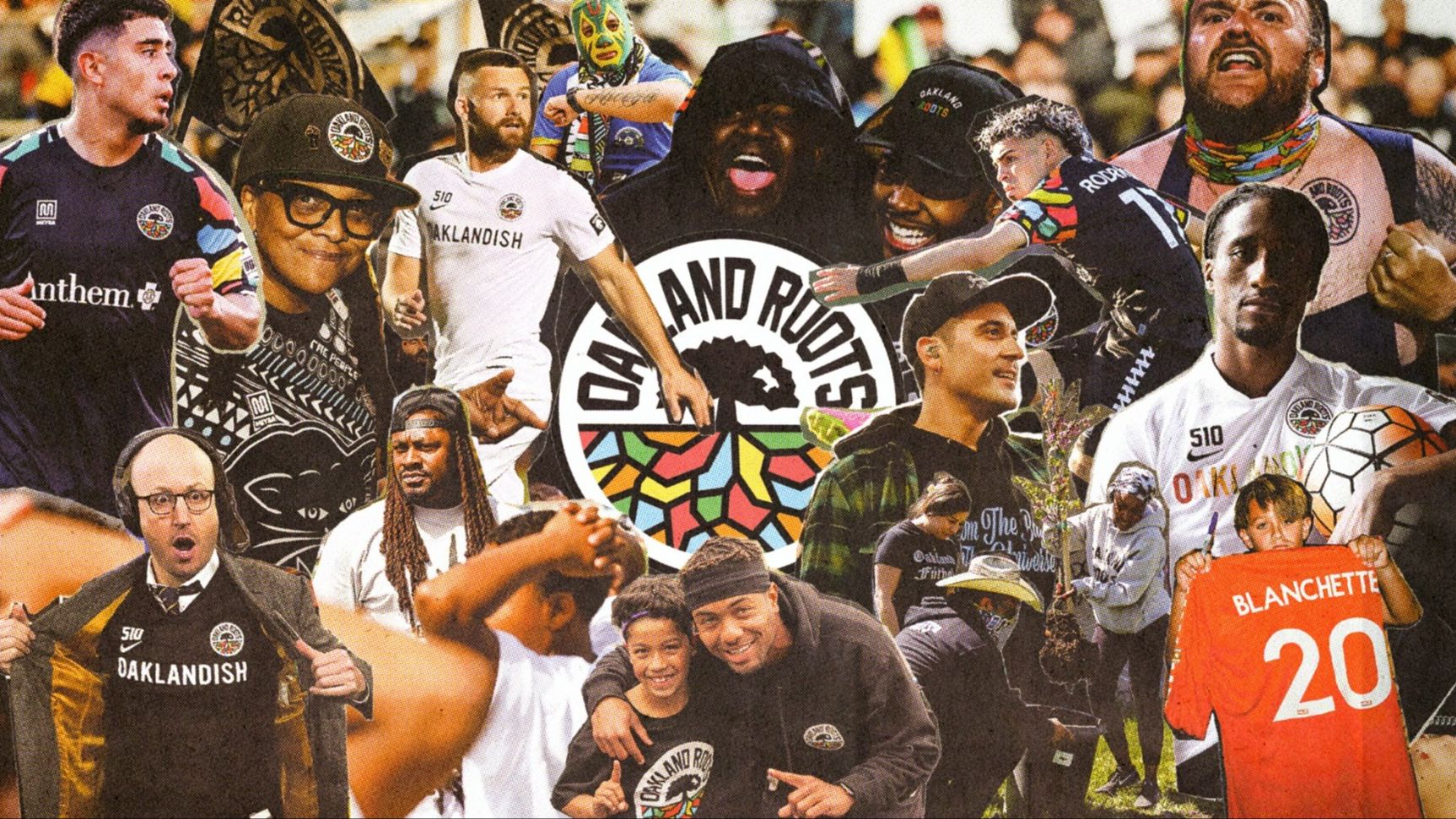
No division in 2017, 4th division - NPSL Founders Cup in 2018, 3rd division in 2019 - NISA, 2nd division in 2020 - USL Championship, 1st division in 2027/2028? When I joined the Oakland Roots SC, the vision to bring pro soccer to Oakland was just a dream and we had no division, no stadium, no corporate sponsors, no office (just rented WeWork space for meetings), a couple full time employees and a few initial home grown player signings from Oakland. Why would I leave my full time job to join a start-up when the numbers are stacked against you?
- ~20% fail in the first year
- ~50% fail within 5 years
- ~65% fail within 10 years
With the Raiders moving to Las Vegas, Warriors to San Francisco and rumors of the A’s moving to Las Vegas, there was a void for sports fans. As someone who grew up on all sides of the Bay Area, Oakland is known for having the most passionate and loyal fan base (and soccer on the global level is the most popular sport). If the Raiders could start out grassroots style (no pun intended) at Laney College in the 60’s with a few thousand fans cheering them on, why couldn’t we? And if we did, how would we ensure we keep the team in Oakland and attract investors and owners who actually cared about the city in which we played and no matter how ‘shiny’ the business opportunity is down the road to move to another city for the sole purpose of profit and commercialization, we will stay true to our purpose, roots and soul.
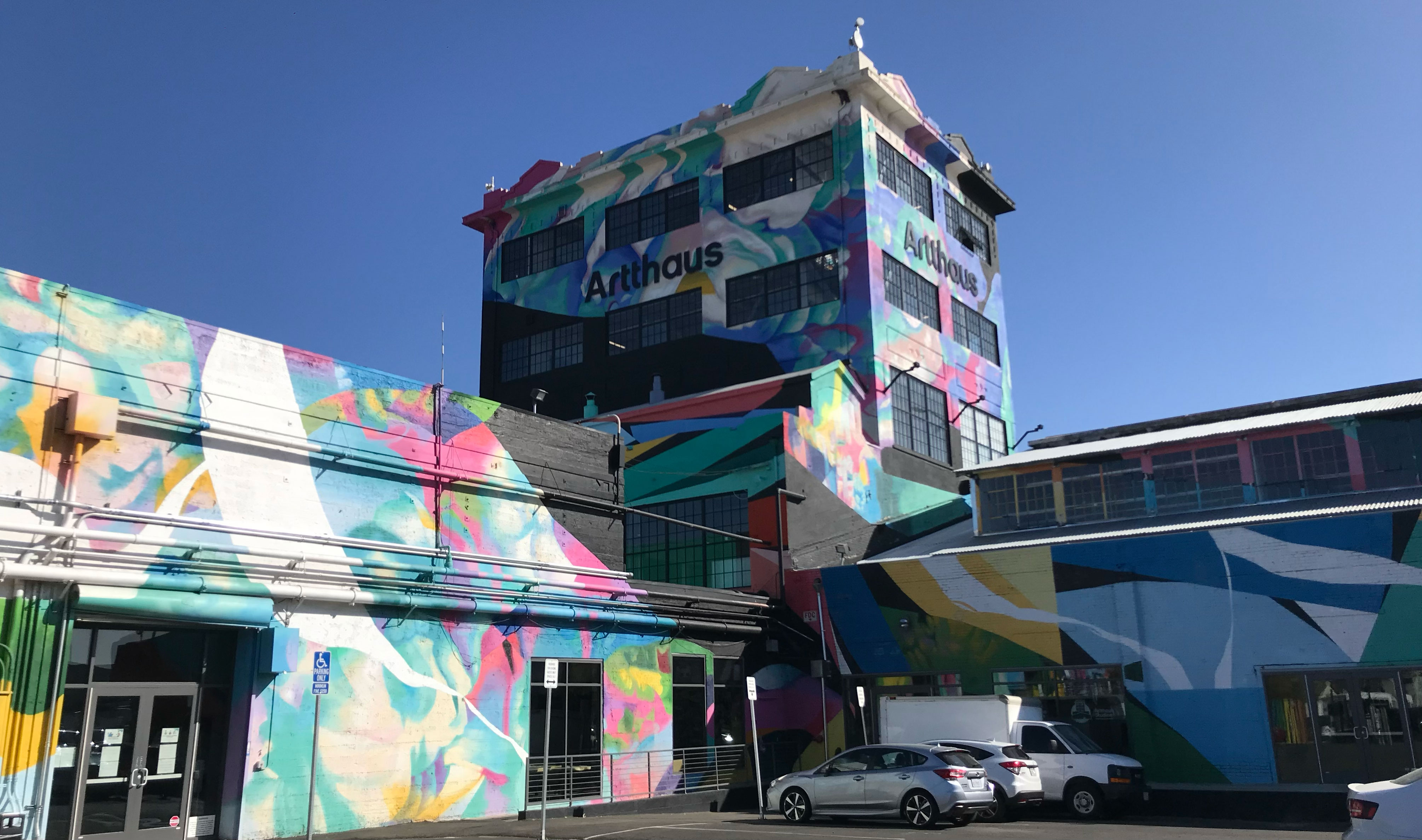 (Source: Oakland Roots Headquarters in Jingletown / Fruitvale)
For those who are unaware, Oakland is one of the few cities in the world where it’s incredibly challenging to ‘park a bus’ on the community and say, ‘hey, we’re a new corporation or sports team’ and we want to start at the D1 level and build a brand new stadium financed by the hard working people via tax incentives. It may work in other cities but not in Oakland (just ask the Raiders, Warriors & A’s). Thus, the first purpose-driven soccer team in the United States was born by the community and for the community - including an advisory board featuring the OG’s from across industries and non-profits in Oakland. With just a couple initial investors writing $25K - $100K+ checks to get the project off the ground, we rolled up our sleeves and got to work!
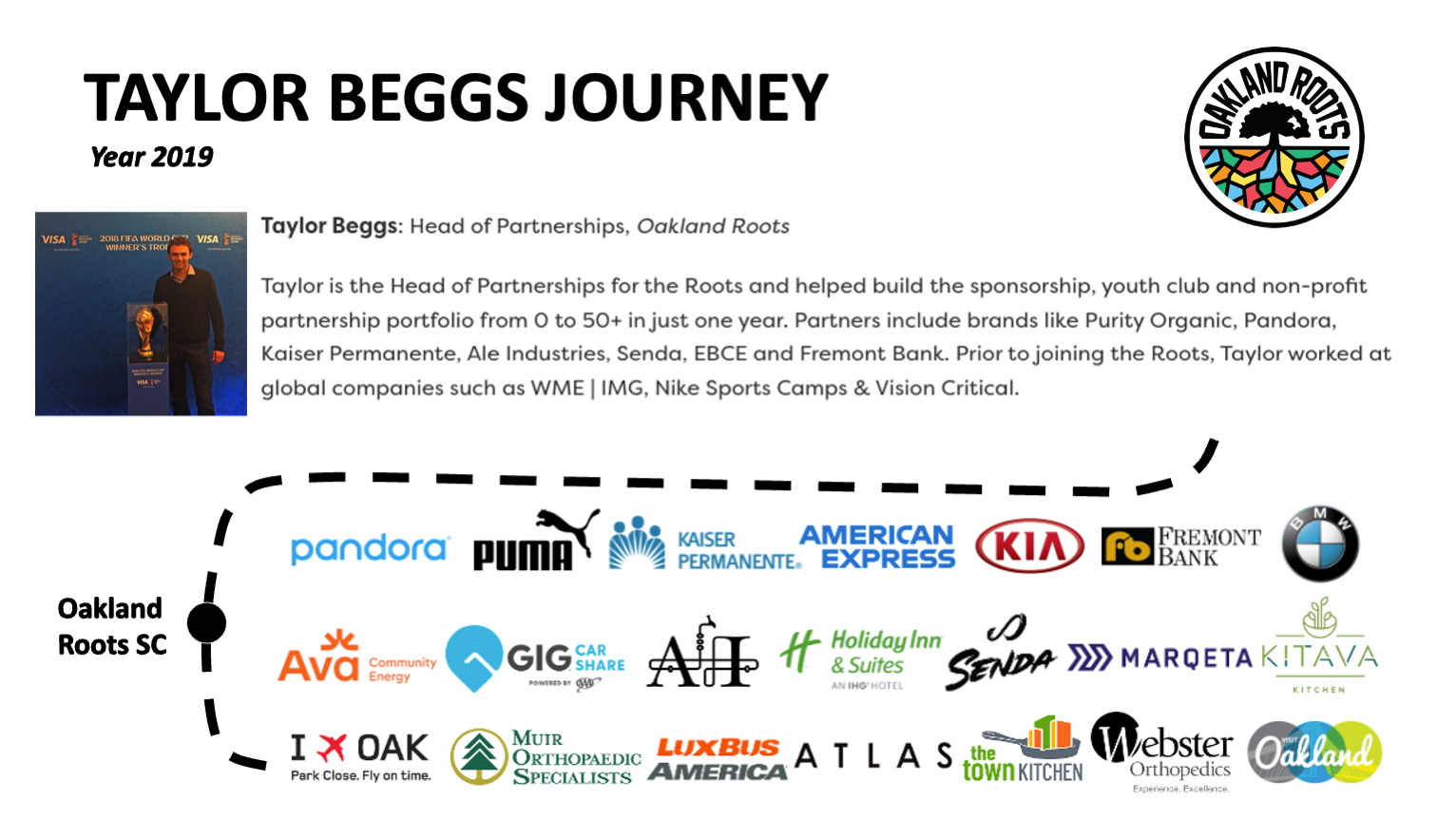
I initially started out on the street team (proud 1st street team member), working community and player event activations on weekends while balancing another full time job in the work week. After building relationships with the founders, investors and CAB (community advisory board), I was hired on as a consultant and after a couple months a Director of Partnerships & Live Events role was posted and given the work I already did for the Chief Operating Officer and Oakland Roots first full-time employee (s/o Christina Low!) while I was at WME | IMG on the Olympics, I was hired on as the 4th or 5th full time employee. My first week on the job, I was told I have a new boss, one of the Co-Founders / CMO who was brought on to build the brand and lead marketing and given how busy they would be, I was told I am now the Head of Partnerships in charge of leading all corporate sponsorships, youth clubs, non-profits and live events.
 (Source: Taylor Invited To Speak On A Sponsor Panel)
I went from sitting in on meetings and taking notes for the Head of the West Coast at WME | IMG to now leading all pitches, creating every new asset, crafting purpose-driven proposals, negotiating the contracts and building out the team to execute and deliver on what was agreed upon. At WME | IMG, when it was time to meet with the CMO at Visa there was much debate internally as to who would be qualified at the highest level to be in that meeting and now I was the one pitching and closing the partnership with the CEO’s, CMO’s, SVP’s etc. at some of the top global companies such as American Express, Pandora Music, PUMA, Kaiser Permanente, Fremont Bank, Marqeta, Ava Community Energy, BMW Motorrad etc. Was it a steep learning curve to convince brands of that nature to sponsor a lower division team? You bet - however, I was willing to do whatever it takes and within 1 year built the partnership portfolio from 0 to 50+!
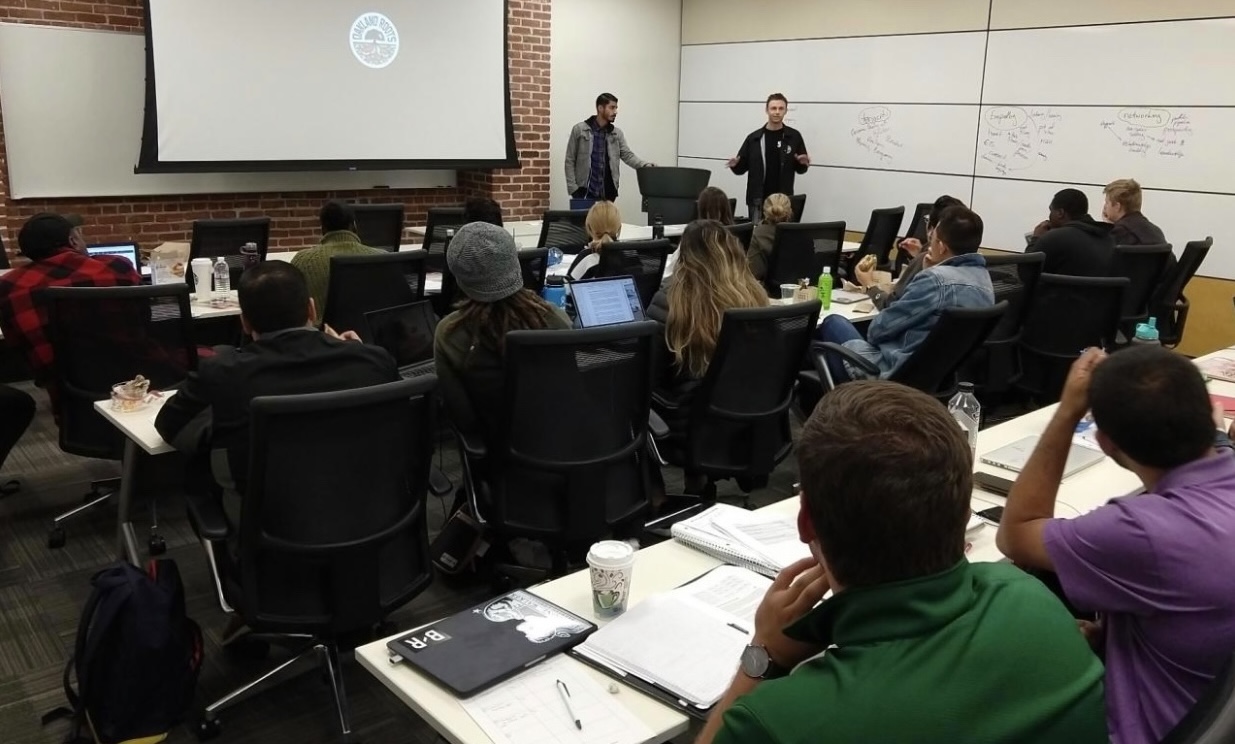 (Source: Taylor Guest Speaker At University of San Francisco Sports Management Masters Program For Several Semesters)
When you work in a larger company or agency there’s typically many systems and processes in place (including red tape that slows things down) and your role has likely already been defined over the years and employees who have come before you. When you work in a start-up, although your day to day is much more ambiguous and it’s up to you to figure out how to reach the goals which have never been accomplished previously, there’s also a lot more responsibility and opportunity for growth (upside). Not everyone thrives in this ‘intrepreneurial’ type of environment, however, those who are willing to embrace the unknown will grow much quicker than those who are siloed in 1 department or who work in a big sports team, for example, who have all the leads come to them given the brand recognition and history for the decades in which they have been in business.
If you’d like to learn more in detail how we revolutionized the partnership model with specific purpose-driven case studies that allowed us to close deals with companies like American Express whose C-Suite told us that “even though Oakland and the Bay Area isn’t a key market for them, the proposal we put in front of them was so aligned with their business that they couldn’t resist saying yes.” Or to the key decision makers and advisory board at Ava Community Energy, a non-profit who (although) struggled during the pandemic due to customers not being able to pay their energy bills, put together a multi-year sustainability partnership that was later featured in Forbes! - I would encourage you to apply to our new accelerator below👇🏽
Author